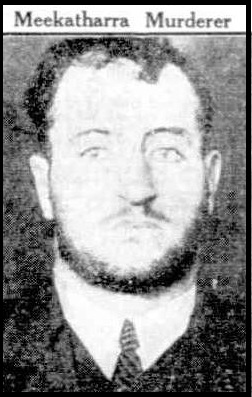
In March 1909, a shocking murder at Meekatharra stunned the people of the Murchison district and became one of the most widely discussed crimes on the Western Australian goldfields. The victim was Katherine Jane Cane, also known in the district as Caroline Jane Scott, a well-respected young woman who had been living apart from Donald Anderson Campbell Scott after an unhappy relationship that had lasted several years. Together they had two small children, one of them only a few weeks old.
Scott, a farmhand and post-hole sinker, had lived with Katherine for about two years, and she was commonly known around Meekatharra as “Mrs Scott.” About eight months before the tragedy, the couple had separated, and Katherine had gone to live with her sister and later at the home of Mrs Wansborough in Meekatharra.
Evidence later given at the inquest revealed that the relationship between the pair had become increasingly troubled. About ten days before the murder, Scott visited Katherine at Mrs Wansborough’s residence and angrily abused her. Katherine, evidently frightened, asked Mrs Wansborough to accompany her to the police station, apparently seeking protection from him. Scott pleaded with her not to go, telling her the police would arrest him the following day over something he had done at Sandstone.
Katherine reluctantly agreed not to report him, and Scott then asked whether she would live with him again once he was released from gaol. When she refused, explaining she was “tired of keeping him,” Scott protested, saying he did not know she had been supporting him. Katherine replied that it “went so near it there was no difference.”
Scott then asked her to kiss him, but she refused.
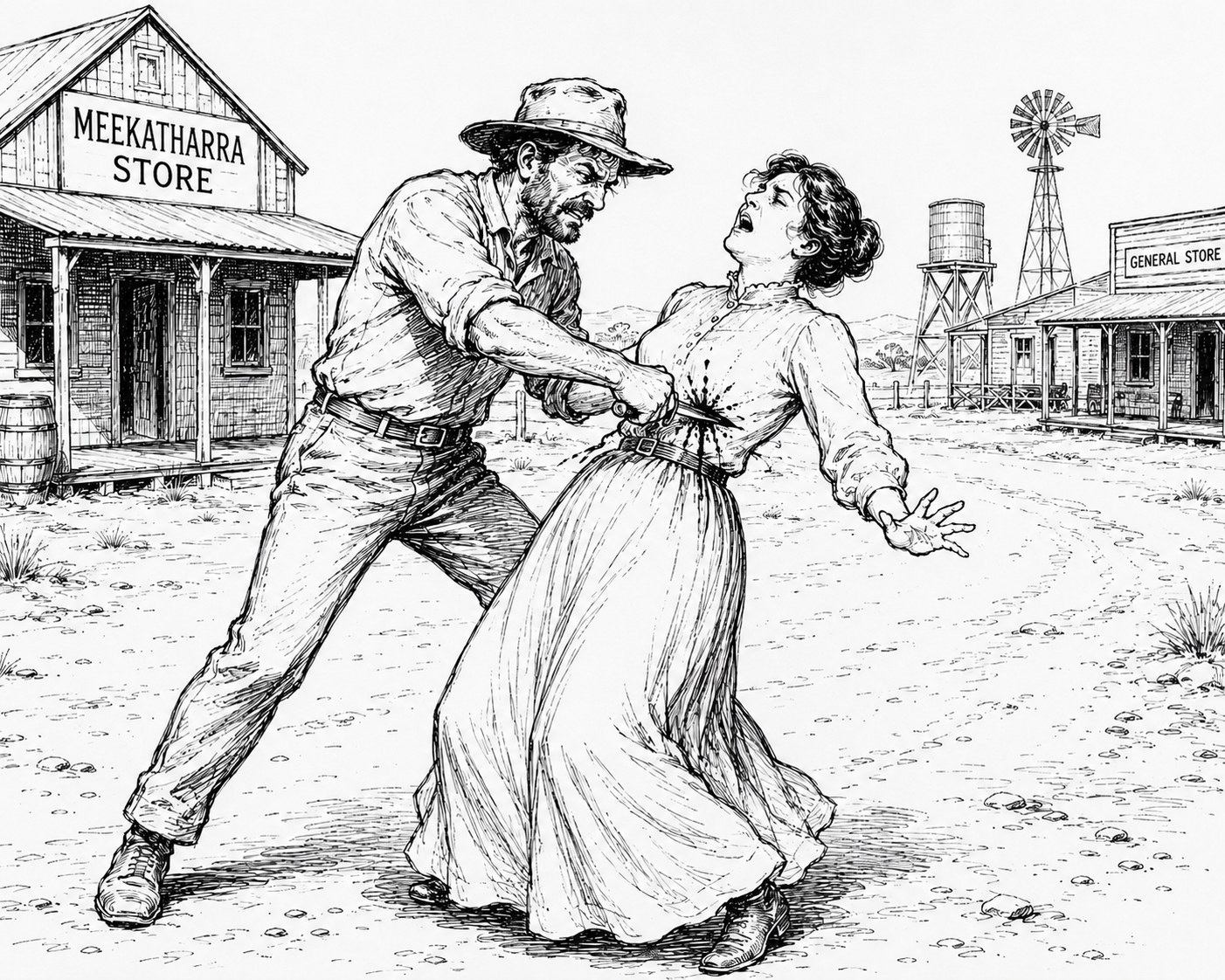
This was reportedly the last significant contact between the pair until the afternoon of Sunday, 14 March 1909, when Scott encountered Katherine while she was walking to the hospital with John Storey. Later that evening, Katherine returned to her small home after visiting her sister, from whom she had collected a fowl for supper. Shortly after six o’clock that night, neighbours heard terrifying screams coming from her home. Katherine suddenly burst out into the street, crying
“Murder! Murder!” Blood streamed from wounds in her chest as horrified residents rushed to help her.
Despite suffering dreadful injuries, Katherine managed to describe the attack. She said she had gone into the kitchen and was lighting a lamp with her back to the rear door when someone struck her from behind and stabbed her repeatedly. She screamed, and the attacker fled through the back door. Katherine then picked up the knife, placed her baby into a pram, and somehow made her way across to the hotel for assistance. Doctors later counted eleven knife wounds — ten to the chest and one to the knee. Father Corcoran was summoned urgently from Norseman by special motor car and attended Katherine during her final hours. She lingered for some time before dying the following morning in the hospital.
One of the strangest features of the case was Katherine’s refusal to identify her attacker. Although many believed she knew exactly who had stabbed her, she repeatedly denied that Scott was responsible. She even told her sister, Mrs Dawson, that Scott was not the man who assaulted her. However, because these statements were not formal dying depositions and had not been made in the presence of the accused, they were inadmissible as evidence. Many in the district believed Katherine had deliberately tried to shield Scott, taking the truth with her to the grave.
The case against Scott was nevertheless considered extremely strong. Witnesses saw him enter Katherine’s premises shortly before the attack and leave immediately afterwards. Scott himself allegedly admitted to several people, including a man named McNab, that he had “stabbed the wife.” Earlier that same evening, he had reportedly been drinking at the Commonwealth Hotel, where he complained to the barman that he had quarrelled with his “missus” and asked whether anyone knew who she had been “carrying on with.”
Police arrested Scott soon afterwards. He was reportedly bleeding from a wound to his own leg when captured. A knife found in his possession was later said by medical evidence to be capable of causing Katherine’s wounds. Scott was taken through Cue under police escort on his way to Fremantle to stand trial in Perth. A large crowd gathered at the railway station out of morbid curiosity to see the accused murderer. Observers noted that Scott appeared remarkably unconcerned about his situation, calmly smoking a cigarette while awaiting the train.
At his trial before Mr Justice Booth, Scott was defended by the eloquent barrister Cliff Penny. Despite the defence, the jury found him guilty of murder, and he was sentenced to death. The sentence, however, was commuted the following day to life imprisonment. Katherine Jane Cane left behind two small children — one aged about two years and the other only ten weeks old.
Scott was eventually released from prison in July 1919. For many years afterwards, he drifted about rural New South Wales working on stations and as a shearers’ cook. Then, twenty-five years after the Meekatharra murder, his name surfaced once more in the newspapers when he pleaded guilty at Queanbeyan to assaulting a girl under sixteen years of age. The old goldfields crime, long buried in the memories of the Murchison, was suddenly recalled to public attention once again. Scott was to serve another two years for this offence.


Leave a Reply