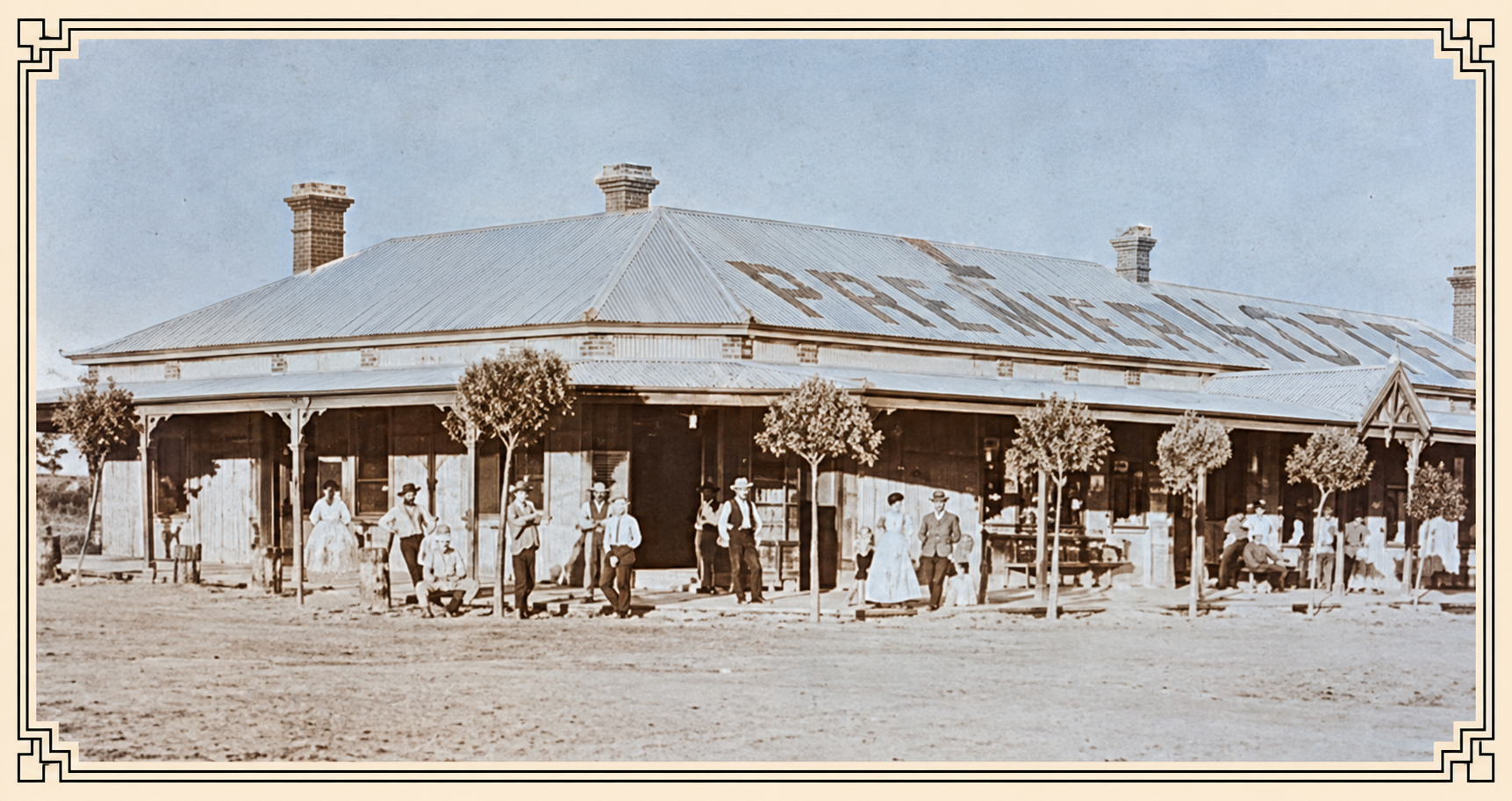

The Sun Kalgoorlie 8 March 1903, page 10
Bill the Topman of Stringer’s Brewery
By Pharisee.
Bill Stiggins had been at Stringer’s brewery from the start, in fact, had helped to put the building up. “Saur the first load er muck took outer the cellar and sampled the first beer, “he said when the origin of the factory came up for discussion in the cooper’s shop. Before Bill came to the fields, he was lumping on the Fremantle wharf, but tiring of the occupation, he joined a crowd of new arrivals who were making for Hannans, and duly arrived at Southern Cross, where he struck up an acquaintance with Stringer. Stringer was a man chock full of ideas, and unfolded many schemes, more or less impracticable, as he and Bill footed it along the dry, dusty track which led to Coolgardie. “Best thing I can think of to make money is a brewery,’ remarked Stringer. “Look how they tear it into them,” pointing towards a party that sat by the roadside opening ‘English’ by the dozen. Same everywhere you go.
‘Brewery! Yes, that’s the thing, and by Jesus I’ll start one.”
But d’yur know auything about the game?” inquired Bill. “Oh, yes,” replied Stringer, me old man useter run a 5-hogshead plant in Victoria, and I learnt a wrinkle or two. I’ve got 200 quid and can borrow a few more if pushed.” Bill became hopeful for the success of the project on finding that funds were available, and took a deeper interest in it when Stringer offered him a job as Topman. “That,” said Bill, after relighting his pipe, that was how the brewery was first started, and how I comes ter holding this ‘ere important post.’ It took a long time to build that brewery, and God knows where Stringer got the money from, but, eventually, a structure with no claims to architectural beauty reared its head upon a patch of sand not far from Hannans. Some said that Stringer used to loot the teams at night for building materials, but he punched several insinuating persons who tried to circulate the libel, and nipped the slander in the bud. The brewery was on the tower system, and water was pumped to the top boiling vat by an antiquated engine that threatened to burst at any moment. Its unsafe character, together with the recklessness of the engineer in charge, who always had it at high pressure whether it was wanted or not, caused several residents in the immediate vicinity to move further away.
Several old vats, the cracks stuffed copiously with bags, were rigged up, and a cooler made out of flattened kerosene tins was artistically arranged close by. A few egg-casks, in the absence of better barrels, were to do duty as cleansers, and the first brew, after much desperate struggling and swearing, was put through. It failed. ‘You see, it was like this,’ explained Bill, Stringer. Instead of looking after his work, we went about town drinkin’ with friends who were congratulatin’ him, an’ we all got pretty well boozed as well. The result was that the engine driver pumped water from the saltwater tanks, and we never knew of the mistake until the beer came down in the cellar. Talk about hog-wash, it was no name for it. I got some down without thinkin’, and nearly heaved me boots up. Stringer comes along and tastes it. ‘ Hell,’ he says, and hits me on the nose. I never heard such horrible oaths. You’ve rooned me, yer blanky spungers,’ he says, an’ a lot more.”‘
After a while, he cools down, an’ we carted the stuff inter the bush, where some natives gets into it, an they was mad fer nearly a month.’ Stringer carefully supervised operations when the next brew took place, and a pretty good liquor was the result. Things went smoothly for a long time after that, and trade was growing fast when a sad calamity befell Bill. He was hanging over the fermenting guile, taking the temperature of the frothy mass within, when, somehow or other, he overbalanced and fell in. Of course, he was dead in a minute or two. As he was in the habit of absenting himself at intervals from the brewery, not much notice was taken, so Stringer, though he swore a bit, undertook the Topman’s duties and brought the liquid into the cellar himself. He marvelled over Bill’s continued absence. “Can’t make it out. Suppose the ‘blanker’ is camping it off somewhere,’ he said, as he went on topping up the new beer in the cleansers.
It was Bill’s duty to clean down after brewing, so no one else ventured near the vats. The big demand for beer caused Stringer to rush the liquid through the cleansing process, and in two days, it was ready for distribution amongst the various pubs. In the meantime, an exhaustive search was being made for Bill, who could not be found high or low. “Them vats must be cleaned out anyhow,’ said Stringer to Cook, the cask washer,’ and you’d better take the job on.’ This meant promotion to Cook. He abandoned the cask washing department immediately and set to work. The top vessels were finally unloaded of residue — such as grains and hops — and the cooler was swept clean. Cook climbed onto the fermenting guile now coated with hard yeast, and commenced to scrape it off. Enclosed in a dark corner of the brewery, the light was faint, and things at the bottom of the vat were not easily seen. The brewer pottering about in the cellar was startled by a howl of dismay proceeding from the floor above, and several other wild shrieks accompanied by the sound of someone jumping heavily on the floor brought him in haste up the ladder.