Daily News 19 January 1935, page 12
Yellowdine Finder Tells His Romantic Story
A horse with teeth missing makes history and
a New Goldfield Rewards Years of Prospecting.
PALMERS GRAPHIC STORY – If it had not been that an old horse, to be exact 25 years old, was four teeth short and could not pick up his living, Yellowdine, which today has excited the mining markets of the British world and in share values is worth fabulous sums, would be still sleeping as it had slept since the early nineties when the prospectors rushed over it in the feverish quest for gold between Coolgardie and Hannans. Mr A. C. Palmer, the discoverer of the field, was interviewed in Perth today, and his story, as follows, has to be added to the already rich volume of romances of our gold.
PALMER – the discoverer of Yellowdine, is a young-looking man, having the appearance of being on the right side of fifty. He is of medium stature and dresses in the fashion of the prospectors in our far-flung fields with whom we are familiar — a quiet blue suit, a blue shirt, with a matching tie, a felt hat of the common or garden ‘Western’ type and a pair of black Bulcher boots, for an appearance that sums him up. In a manner, he is retiring and, like most prospectors, resents any obtrusion of his personality and deeds into the light of publicity. A representative of ‘The Daily News’ found Mr Palmer in Hay-street today, and, after some persuasion, got him to tell his story. He is an Irishman who came out 22 years ago and, after some experience in the Eastern States, has been located in the West. For 20 years he has been devoted to prospecting, with spells to earn wages in the Wheatbelt. The money he earned there was devoted to prospecting enterprises. In these, he passed along the course of years up and down the goldfields areas of the State from Cue to Southern Cross.
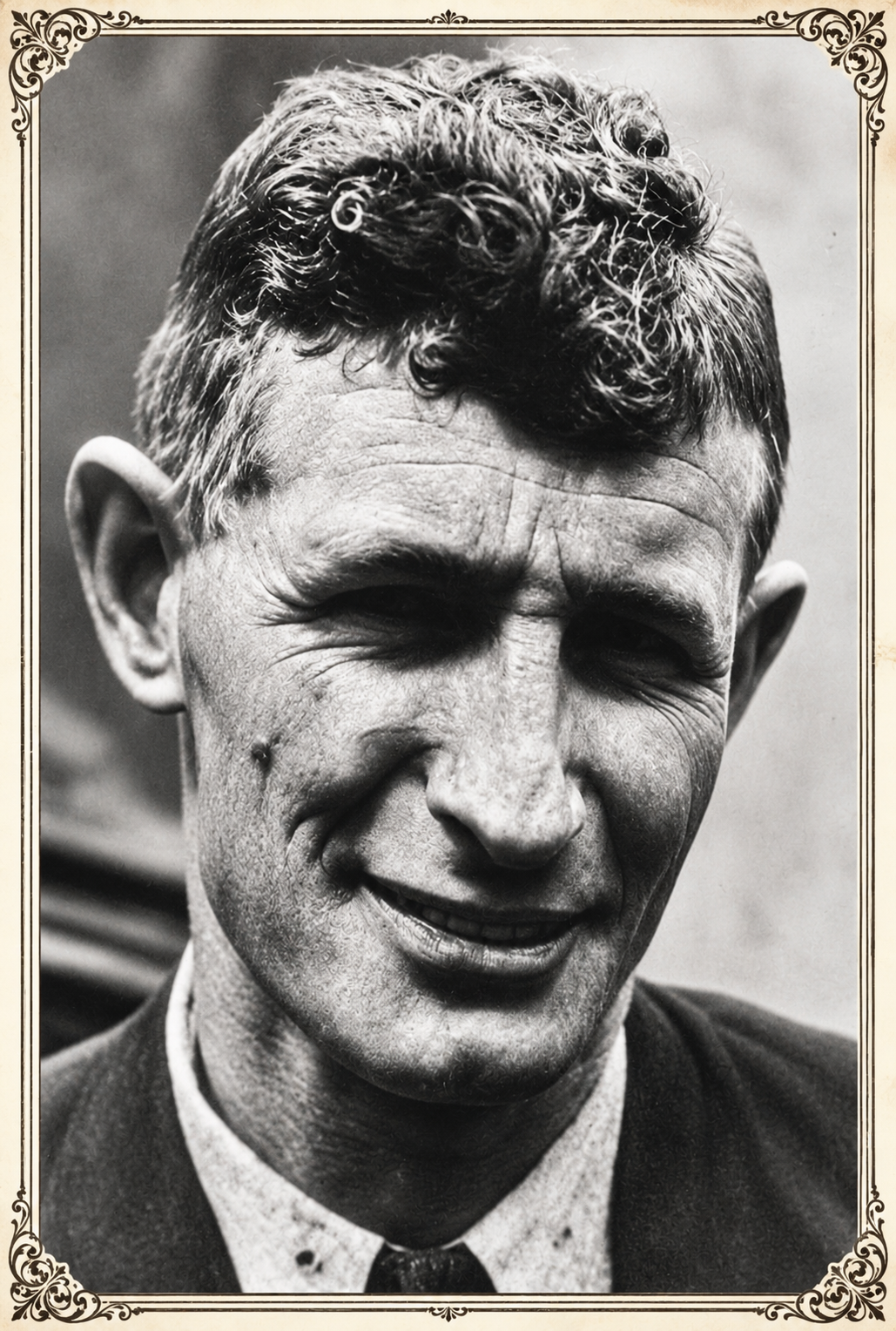
Mr Augustus Charles ‘Charlie’ Palmer
Interspersed were excursions into the furthest east of the then-known gold belt. The tale of his earlier adventures will keep till later, while we come down to the crux of his career, which ended in the finding of the now famous goldfield at Yellowdine. He was the pioneer! Others who came after have placed the find on the stock markets of London and Australia, and today Mr Palmer finds himself the centre of a historic development of the Western Australian goldfields. A district that has been asleep, and into which he had to cut his way through thick but stunted timber, is now, with the influence of capital, showing possibilities of wealth in millions and is already a favoured market on the Stock Exchanges from Perth, through the East, to London.
YELLOWDINE’S BIRTH – The story of the finding of Yellowdine is much too prosaic for its climax. Palmer found himself in Southern Cross “broke to the wide’ with his prospecting ventures. Jack Whinfield, a water supply official, with a wide knowledge of the surrounding country, advised him to go up northeast of Southern Cross, where 60 miles away, he knew there was good prospecting country. Palmer was so hard up for cash that, wanting a tank to hold the very necessary water, he could not finance it. Whinfield gave him a tar barrel, and Palmer promised to put him in on anything he found. Here comes the kernel of the story. Palmer was going to take the advice of Whinfield, but his old friend, a horse, which had been on the track with him for 17 years, was four teeth short in the jaw and could not pick up his own living off the country and had to be fed with fodder carried on the journey.
Palmer had no money for horse feed, so in his own words ‘I picked up two blokes, who agreed to fund me for horse feed for the trip, provided I let them in 50 per cent, on anything I found.’ There came the historic switch, and Palmer describes it this way, ‘An old bloke, somewhere about 70, named Heaney, a pensioner, told me of the country south from Yellowdine, which had not been prospected, but had only been rushed over by myriads of men flocking to Hannans. So, because my horse was a bit shy of teeth, and I had to go shy myself on the horse-feed bill, I decided to take Heaney’s tip in preference to Whinfield’s. I left Yellowdine and went south on the Parker’s Range road for 10 miles. A bloke named Tom Egan had told me in Southern Cross that thereabouts there was a soak. I found it, left the horse there, and on a Sunday morning went through dense scrub, looking for a lake and an old road, of which Heaney had told me.
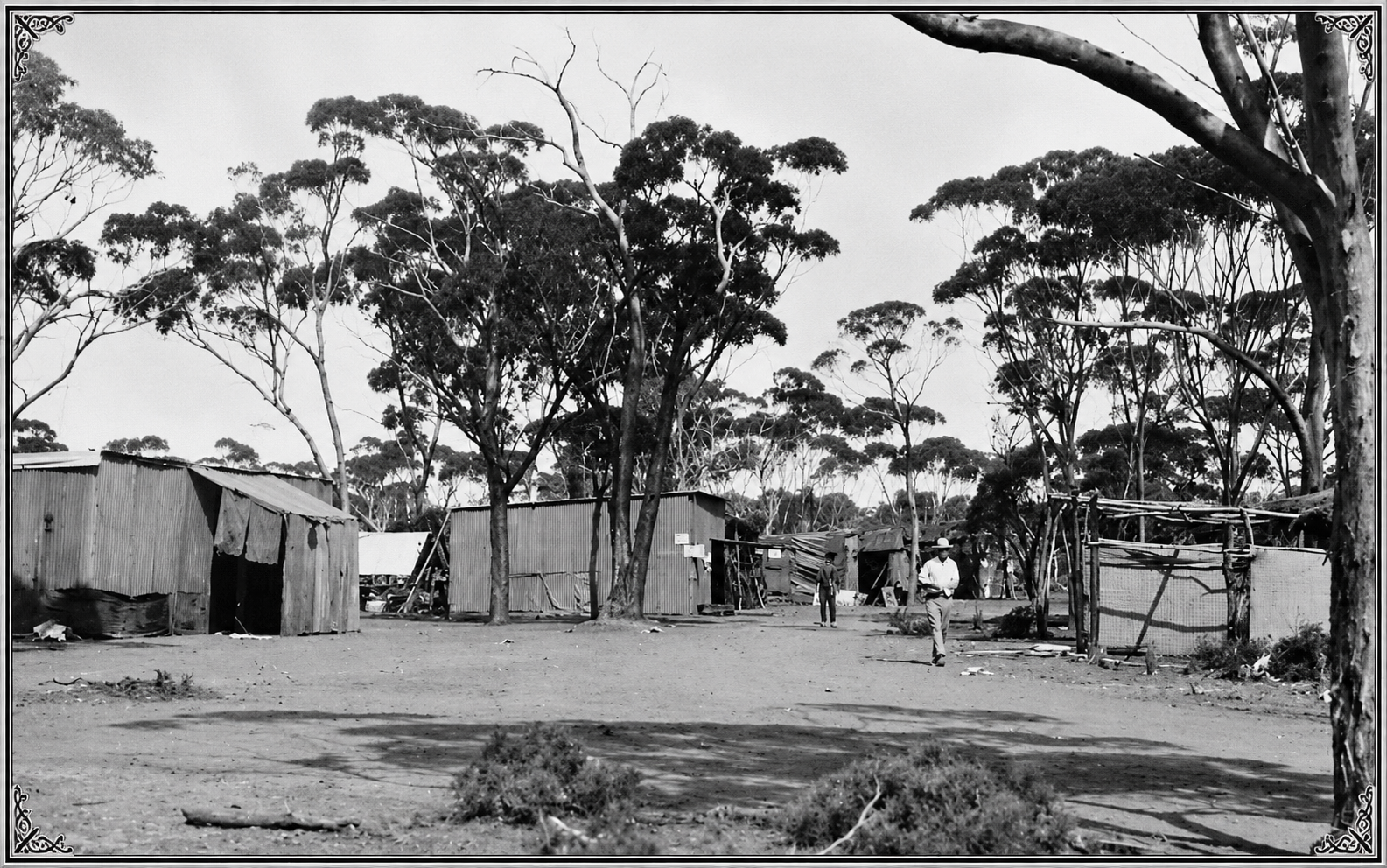
Yellowdine Townsite 1936 – Image SLWA
The old road was one which years before had been made by timber getters, supplying mines around Southern Cross. I found the road,’ Palmer continues, ‘and went back to the soak, five miles away and put in two or three weeks clearing a shortened road to the good country which I had located. A little testing had shown me that the character of the gold-bearing formation was ironstone jasper. Later, it was found there was a big expanse of quartz. While clearing the road. I used to go out by myself from the soak every morning and do some prospecting. At the far end, I got a tiny colour half a mile from what is now Whinfield’s block. Then I loamed from there and got prospects of five or six weights. I worked north and found values of three, 15 and 30 weights. Finally, I picked out the most likely place where gold would occur. Then I went into Southern Cross and told my backer, the man who had provided me with the horse feed for my old-time horse friend.
The interviewer was anxious to know what had happened to that old horse that had played a part so prominent in the discovery of a new gold find of such vast importance as to set the mining world by the ears. ‘The old chap is now turned out in a paddock, enjoying life, grazing to his content at the cost of 1/9d a week to me.’Mr Palmer said, ‘and, out of this hurly-burly of Perth, I will be going back next Tuesday to see how he is getting on.’
Note: When Whiskey passed away later that year, Charlie had a headstone erected over him.
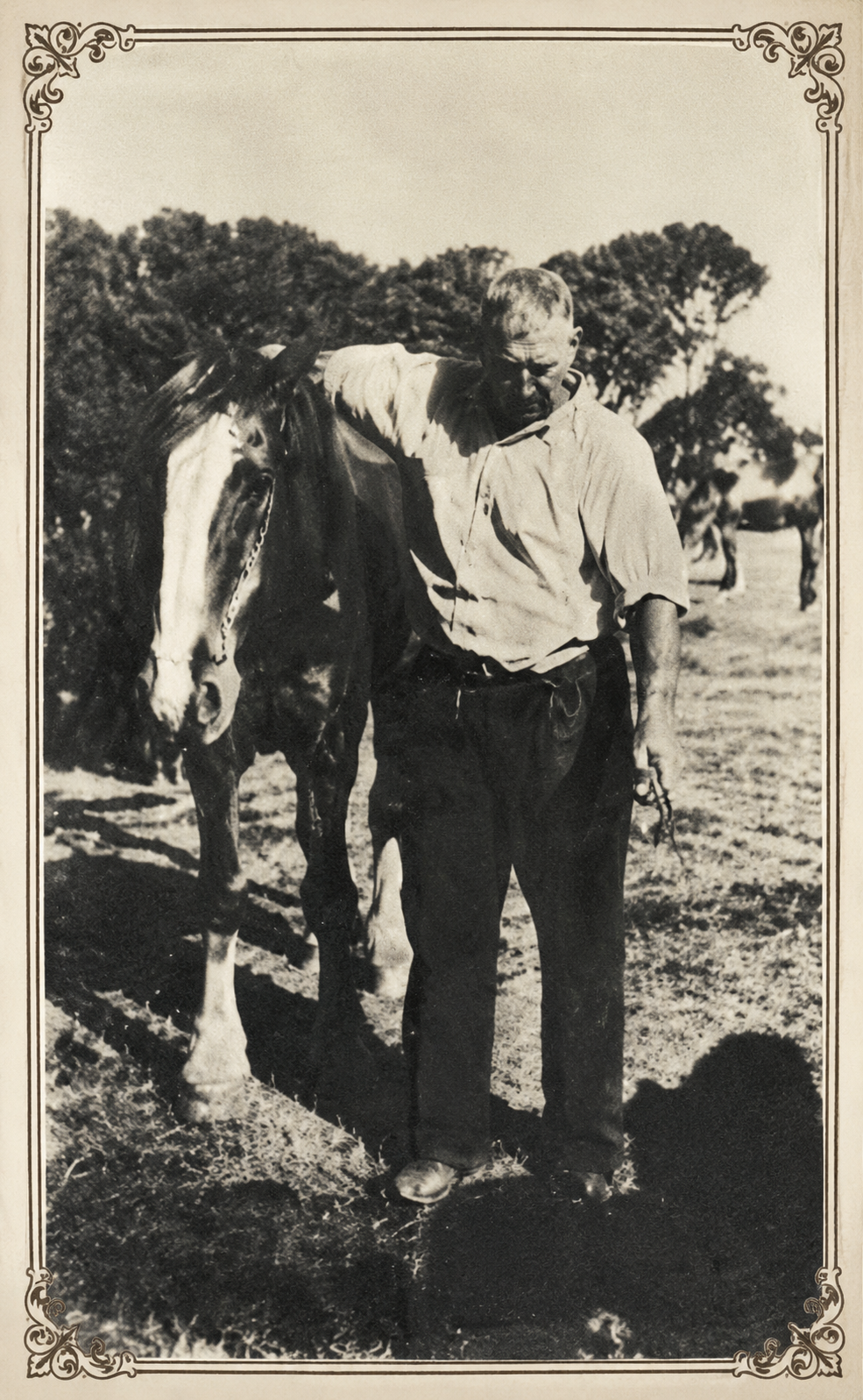
Tom Egan holding the horse of Charles Palmer the discoverer of the field – Norseman-Esperance News 20 June 1936, page 8
PEGGING THE FIELD – Thence onward things moved. It is perhaps best to tell the story in Palmer’s own words: ‘Whinfield came out, and I gave him advice where to peg. Tom Egan I put on the south of me, and then Nyland and George Waiter drove out and asked me to put them on. The following morning these two picked up a floater, and I showed them how to loam. Four hours later, the Swede, Nyland, said to me
‘By cripes, Charlie, she’s — rich.’
If it had not been for the Swede, the field would still be asleep. He set things moving. A fortnight passed. Whinfield came out again from Southern Cross and at the same time a ‘cocky’, a man named Brown, and one named Ferrier, followed.’ In the words of Palmer, ‘Brown pegged, but I advised him to try a block east of Whinfield. He pegged that and sold it for £300. On the market, it is today worth half a million.’ Since then history has been made. Palmer’s find has become Yellowdine and the stock markets of the world are juggling in the shares and talking millions in value. The discoverer, the retiring Irish immigrant, is world famous and makes out of his find of a bonanza, a 24-acre block, the half of which he owns, the other half being the property of the two men who backed him for the chaff which went to feed his horse. This block is under option for £7000. There is yet to be settled his reward claim for the discovery of a new goldfield, which may mean for him another £1000.
EARLIER CAREER – The discovery at Yellowdine was the climax to a long, arduous career of prospecting. Mr Palmer has circled around the goldfields from Cue to Yellowdine. Sixteen or 17 years ago he was at Payne’s Find, then had a look at Bullfinch and on that excursion had, for 60 miles, to feed his horse on damper, because the country was summer stricken. He had with him then an old goldfields prospector with Coolgardie experience, named Jack McIntyre. The two of them travelled from Mukinbudin to Payne’s Find and across to Lake Austin and Cue. At Cue, the Parson’s Nugget had been found on the road to Day Dawn, and the partners did some prospecting there without success. They went out to the Big Bell, which is today, according to reports, being capitalised by an American syndicate worth millions, but was then run by Chesson and Heydon, the famous Cue partnership. The Big Bell was in those days known as a remarkable big low-grade proposition, capable, with money, of exploitation to a degree that would justify the establishment of a large town. Chesson and Heydon were not able at the time to command the capital, and the Big Bell was passed over until recent days when the American syndicate took it over. Palmer’s experience of the Big Bell lasted only over three shifts. He and his mate collected £6 and then went prospecting once more.
They passed over ground which today is the Rothsay mine, and, although impressed with its possibilities, they were discouraged by the 60 miles of cartage to the nearest battery. They saw, too, the ‘Retaliation’ at Wubin, afterwards floated by Dorrie Doolette, but they were short of horse feed, and, because a prospector in those days depended for his life on his horse for the reason that the horse meant their getting to the nearest water, they passed on. That horse was the one that has since been superannuated and which, at the age of 25, did 56 miles in eight hours with a fortnight’s camp supplies on its back. Spells at ‘cockying’ (a small-scale farmer) and a look in at Northam, where seven miles out is a tin lode, which has, so far as Mr Palmer knows, never been exploited, were followed by two intervals at Forrestania, 120 miles out from Condinin through the rabbit-proof fence. ‘I liked the look of Forrestania’, said Mr Palmer, ‘but I was ‘stiff’ at the time, and I had a new horse which I had to hobble as well as tie up and put a bell on to prevent him straying and give me ‘the office’ when dingoes were attacking him.’
From Forrestania, Palmer struck off east for Southern Cross, where he found a sympathetic sergeant of police, who managed to put him on the Government prospecting scheme. He regrets that the sergeant, having died suddenly, is no longer available to give help to hard-up prospectors. At Mt Rankin, where he put down two shafts, which showed prospects up to 6oz. to the ton, but when bulked were disappointing in the battery crushing, followed, and then came his later experiences already detailed, which led to the find at Yellowdine.
PALMER’S FUTURE – This is the first time that Palmer has been in Perth for seven years. He is already tired of the city and intends to get out to go to the Warden’s Court at Southern Cross, leaving here on Tuesday, and, unless business calls him, he will stay out. What money comes to him from his find he will put into further prospecting, and he has hopes of making discoveries which the experience he has recently gained will enable him to capitalise with much more benefit to himself. by The Westerner.
Further recommended reading:
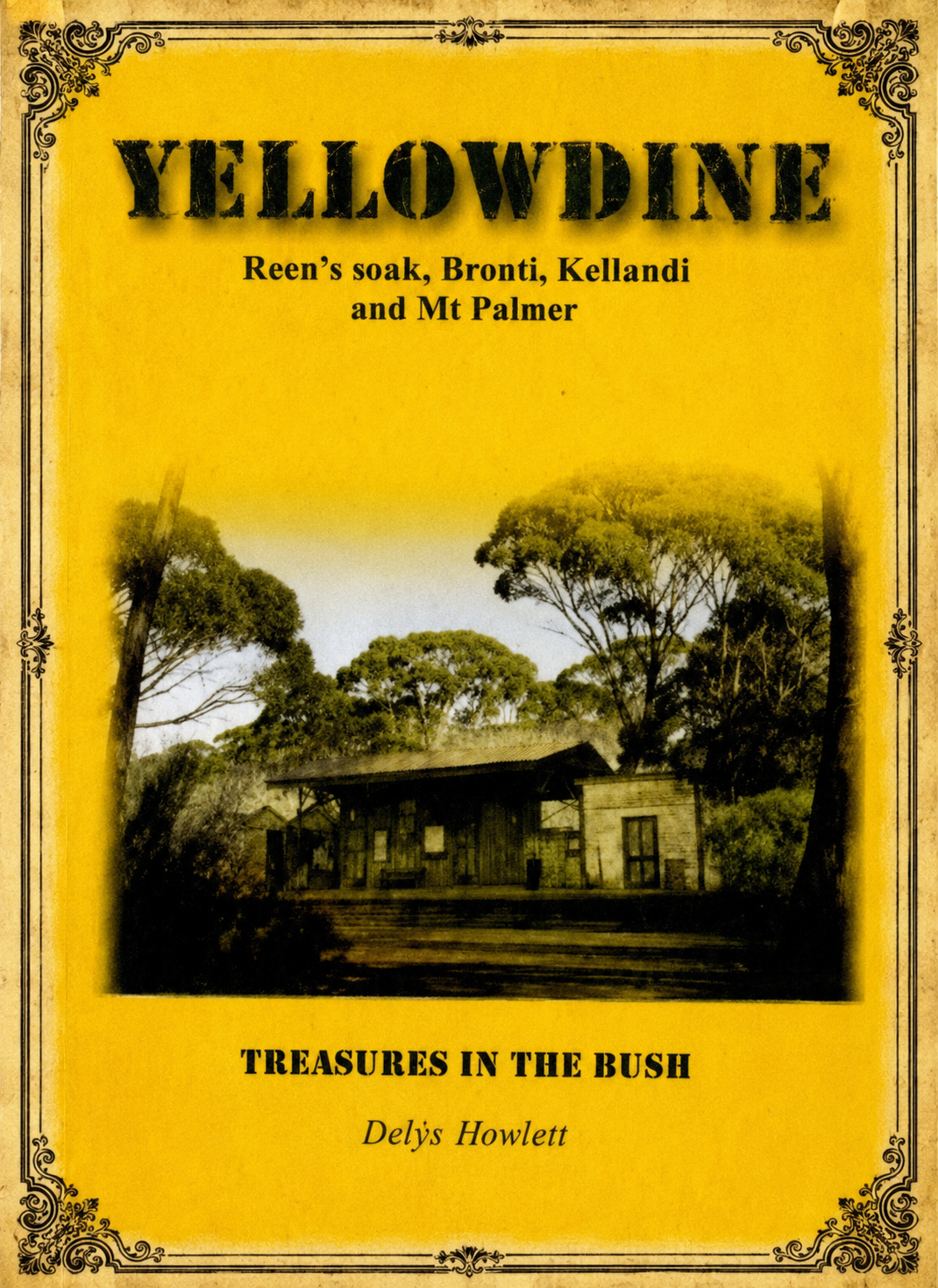
Yellowdine – Treasures from the Bush by Delys Howlett

Daily News 13 March 1953, page 3
Yellowdine Finder Dies – Augustus Charles Palmer (65), discoverer of the rich Yellowdine goldmine in the Yilgarn, died early today at Marvel Loch. For several years he has been prospecting at Blue Hills near Parker’s Range in the Yilgarn. Palmer made the original discovery near Yellowdine in 1934 and caused a sensational gold rush there. Mt. Palmer, the town established at his find, was named in his honour. He was born in 1888 in Wicklow, Ireland and was the son of Charles Palmer and Rachel Feviar. He married Gladys Estella Tassell in Kattaning, WA in 1936. He is buried in the Anglican Section of the Southern Cross Cemetery.


Moya Sharp
Latest posts by Moya Sharp (see all)
- Dear Reader - 10/10/2026
- Doyle’s Well: Coaches, Cold Beer and Frog Cocktails - 10/10/2026
- A Fate Worse than Death – Lost in the Bush - 10/10/2026
Goodmorning Moya,
This to me was a great story: a man and his horse against the odds.
I do love your stories, and am so happy you published some years ago a story about my grandparents and the line back to Ireland.
Currently I am endeavouring to put together a story on my great uncle Adelaide born Charles Henry Brookes. I will be contacting the Northern Territory Records office to see if I can have them published by you.
I recently had a trip back to Stanley Chasm where I was able to stand in the same spot as my great uncle did when he was escorting the SA governor from Larimar to Oodnadatta in 1888.
Best regards
David Howell
Well done Moya. I enjoy your work.