
I was seized with gold fever in early 1894. I started off with a few friends in quest of fortune and reached Perth after a voyage of little interest, ten days out from Melbourne, to find the place with a large population of tent dwellers. They were either preparing their equipment to start out into the unknown, or those who had seen all they desired of the golden region of the mulga and were returning whence they came.
Hundreds of men were camped about, particularly at the Perth Causeway, making preparation for the great adventure in which golden lumps, then known as slugs, were to be picked up on the surface and often only a few inches below in many instances. However, where prospecting was being carried out, there was no fresh drinking water available. Many of these campers were preparing their outfits for condensing their own water supplies from the salt lakes and wells. My mates and I paid 1/- shilling a gallon for our supplies, but in some cases, as much as two shillings and sixpence a gallon was the cost.
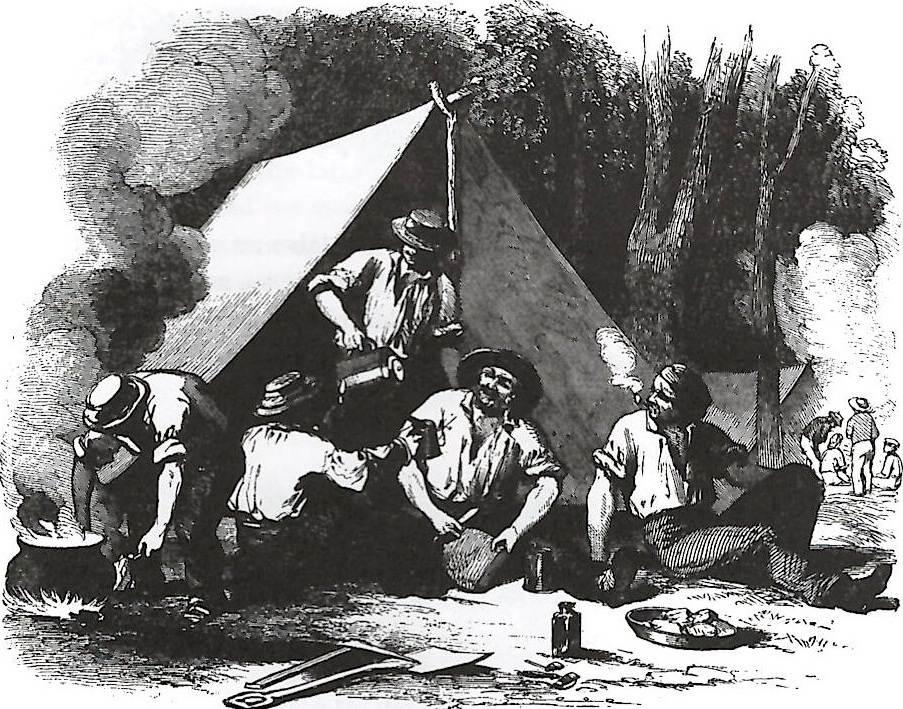
On our way from Southern Cross to Coolgardie, a distance of 114 miles, which was accomplished on foot, we were fortunate in being able to replenish our water bags at various granite rocks which were on our route, each of which consisted of many little depressions in the rocks which were receptacles for recent light rains. Although the water remained in them to a depth of only one or two inches for the most part, there was ample to be scooped up for the filling of our bags. We were passed on the way by a man and his wife, also on foot, she being a very robust type and dressed in masculine garb, which so disguised her sex that we only learnt some days later that she was a woman.
We heard many of the tales of hardship from a man of about 55 years. I overheard him talking to a group of passengers on my boat, he said; “men are dying like phosphorous rabbits back there from Typhoid, it’s not the old men like me that go, but the young fellows like yourselves” so impressive and apparently earnest was he that these same young fellows, tracked back to their parental roots as speedily as circumstances permitted.
As for me, my friends and I, although our hopes were considerably disturbed, we determined to take the risk and go to the front. After our 2000-mile journey, we had not reached the outskirts of El Dorado. Suffice it to say that after a week’s stay in Perth to provision, we set out on the remaining 300 miles. The government railways mainly run as far as Northam, where we camped for the night. The train started out into the night, and by a fortunate chance, our party were among those few who secured the only vehicle turned into a carriage on that train. All the other passengers had to scramble onto open trucks, which were where they were to remain for the night, and as it was the end of May, it was bitterly cold.
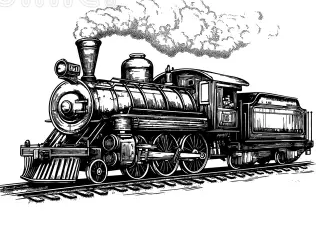
There were some even more unfortunate who, not having sufficient means to pay their fares, crept under the tarpaulins of the laden trucks of goods and were hunted by the guards from truck to truck at various stopping places and driven from one precarious position to another as the case might b,e and so got to their destination.
After a few days in Coolgardie, we started further out back. The first day out, we struck a new rush where I met an old friend who recommended we peg out a claim without loss of time. There were only about a dozen men on the ground, so we pegged off our 50 square feet. This occurred about 6:00 PM, but by midnight, there were 500 men on the spot. The news of the rush had a peculiar knack of spreading with remarkable rapidity. Everybody was keen for the approach of daylight, and then what was on the previous day a dreary, desolate mulga flat had become peopled by a huge crowd and the centre of a lively scene of activity.
A mate of my old friend was the person responsible for all this display of energy. It appears that he had been specking on the flat from time to time for several weeks, and he had succeeded in picking up about 5 small slugs weighing upwards of 7 ounces. Strange as it may appear, this was the only gold got on the flat, and it is but one of many instances where gold has been specked similarly on the surface and nothing more obtained afterwards. The Finder of the slugs in this instance applied in the usual way for a reward claim to the Warden in Coolgardie and was granted 10 ordinary men’s ground, which was known as a reward claim to which he was entitled as the discoverer of the gold. However, he just missed out on being roughly handled by disappointed diggers who, after a few hours’ work, found nobody had got any gold. Some of the wilder elements suggested that his ears might be taken off, but better counsel prevailed, and he was allowed to retain these appendages. Being an elderly man and very meek may have accounted for the well-advised leniency of the 500 rushers who coveted a share in the good things at the place he found. This rush was known as the Bonnie Vale, named after Bonnie, the Finder of the seven ounces of gold lying on the surface.
After our futile efforts here we returned to Coolgardie and the next day set out for the I.O.U. (later to be called Bulong).
The game of ‘Two-Up’ was popular on the fields, as is the case in most men’s camps in Australia. Many men parted with all of their equipment as well as their money in this ill-advised game. One man I knew returned from prospecting outback to Coolgardie. His belongings consisted of a well-equipped team of horses and dray with the usual prospecting equipment, but the lure of this game was irresistible, and he gambled and lost not only his money but his whole outfit.
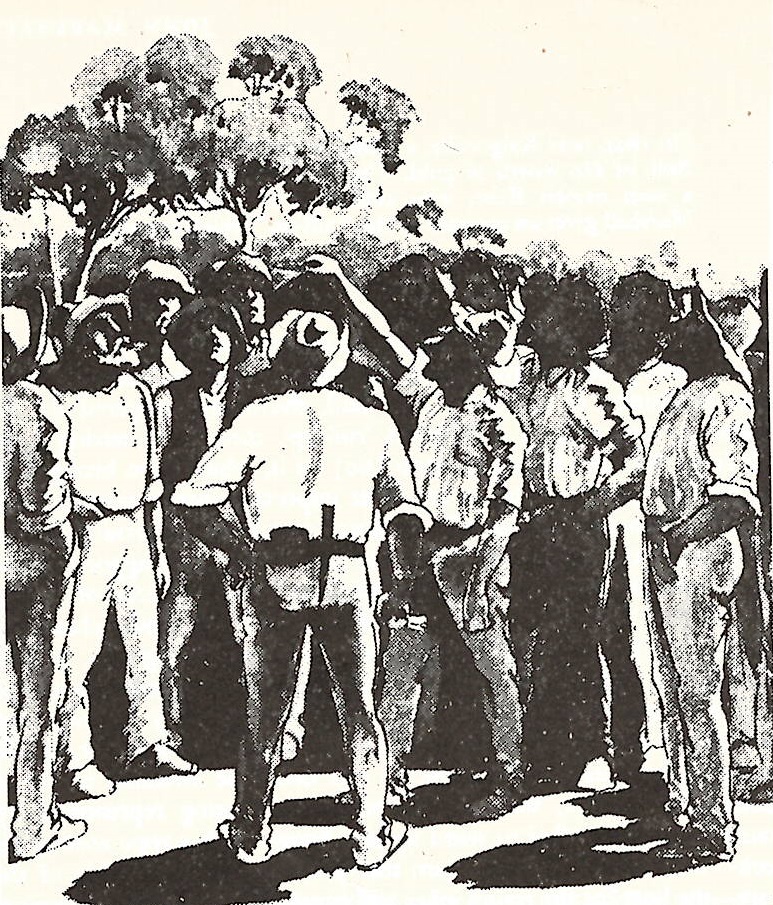
Numerous rich finds of gold were discovered on or near the surface, and in many cases, these were isolated patches, nothing of consequence being got by opening out and further prospecting. A find known as the ‘Billy Can Rush’ was one of those remarkable cases of discovery of slugs and nuggets of gold on the surface. Amid the scrub, one of the party who had wandered from his mates, he was reported to have almost filled his billy can. The place was rushed of course but nothing more was found. Another rush saw a man who had a 50-oz nugget in his pocket. He found it about 6 inches below the surface and was still going on with his work in the hope of further riches. This find was worth about £200 and did not apparently excite him; he seemed quite unconcerned because his mate had parted company with him and left on the return journey to Victoria the day before, so he had lost all his right to a share in the precipitous windfall.
Diggers Justice
In the absence of police, law and order were rigidly maintained by the miners themselves. The property of each was strictly respected, and theft of belongings left in any one of the many tents distributed in the mulga scrub was exceptionally rare. However, a few incidents did happen when the culprit was severely dealt with. One such occasion happened shortly after we reached the I.O.U., and a man was caught pilfering in a tent while the owner was absent at his work. A ‘Roll Up’ among the prospectors in the immediate neighbourhood was called, and they tried the offender. He was given only a few hours to leave the field, never to return.
By daylight the next morning he had gone and was not seen again
In another case, within my knowledge, three mates were working on a claim that was not as rich as they had hoped, so one of the party made it back to Coolgardie to learn of any new or promising fields that might have been discovered. Coolgardie was then the centre of information. This man was known to one of the members of our party and met us in Coolgardie before we had left for other fields and joined up with us on our journey to the I.O.U., where he had left his two mates still working their show. He had been back a day or two when a man working an adjoining claim remarked to him that it was a nice slug your mate found while you were away. “Oh no’ our friend said, “No slug was found in my absence. “Well”, said his informant, “ask him and if he denies it beat that dish and we’ll have a Roll Up. He asked his mate, who admitted that he’d found a slug but was keeping it as a surprise for him. This was too obviously a lie, especially as he had not told the third mate who was working alongside him. The slug was 13 oz, and it was decided to equally divide it between the three mates that night. The offender also left daylight the next morning, never to return.
Recreation
Boxing matches in early Coolgardie were one of the few sources of entertainment. Two of the prominent townspeople, Smiler Hales and Reggie Pell, acted as referee and timekeeper, respectively. The audiences were particularly enthusiastic and, for the most part, were keen and discriminating critics. Smiler Hales, as most people know, was a journalist and his articles in the Coolgardie paper had an outstanding originality and were read with keen interest by the townspeople and prospectors. Another popular source of relaxation was to repair to the De Baum’s Hotel at night to a large room where two billiard tables were kept busily engaged at one end and the bar at the other, the noisy hum of conversation and hilarity made the thronged room, assisted by liquid refreshment obtainable, a jovial meeting ground.
Each night at De Baum’s room was usually crowded. A good-humoured Scot who had been partaking freely of his national beverage allowed his kindly intent towards his fellows to take the form of a bear-like hug or embrace as his unsteady steps carried him backwards and forward across the room. For the most part, his intentions were taken in good humour. The Earl of Fingal, who was leaning over the bar counter in agreeable conversation with one of the barmaids, was rudely surprised by a bear-like squeeze from the all-embracing Scott. Possibl,y the noble Earl had visions of an attack by gangsters as he was there in Coolgardie negotiating for the purchase of the phenomenal Londonderry Find. The look of consternation in the Irish noble’s face dwelt long in my memory. The radiant Scott quickly released his embrace, quite oblivious of the identity of the distinguished personage, and sailed away to other parts of the room for further victims of his unwanted attentions. But what a difference in the next morning, I met a much wiser and sober Scott with both his eyes highly coloured a dark purple hue; he had met someone who evidently resented his unwelcome attentions and who expressed his resentment in a way that there could be no mistaking.
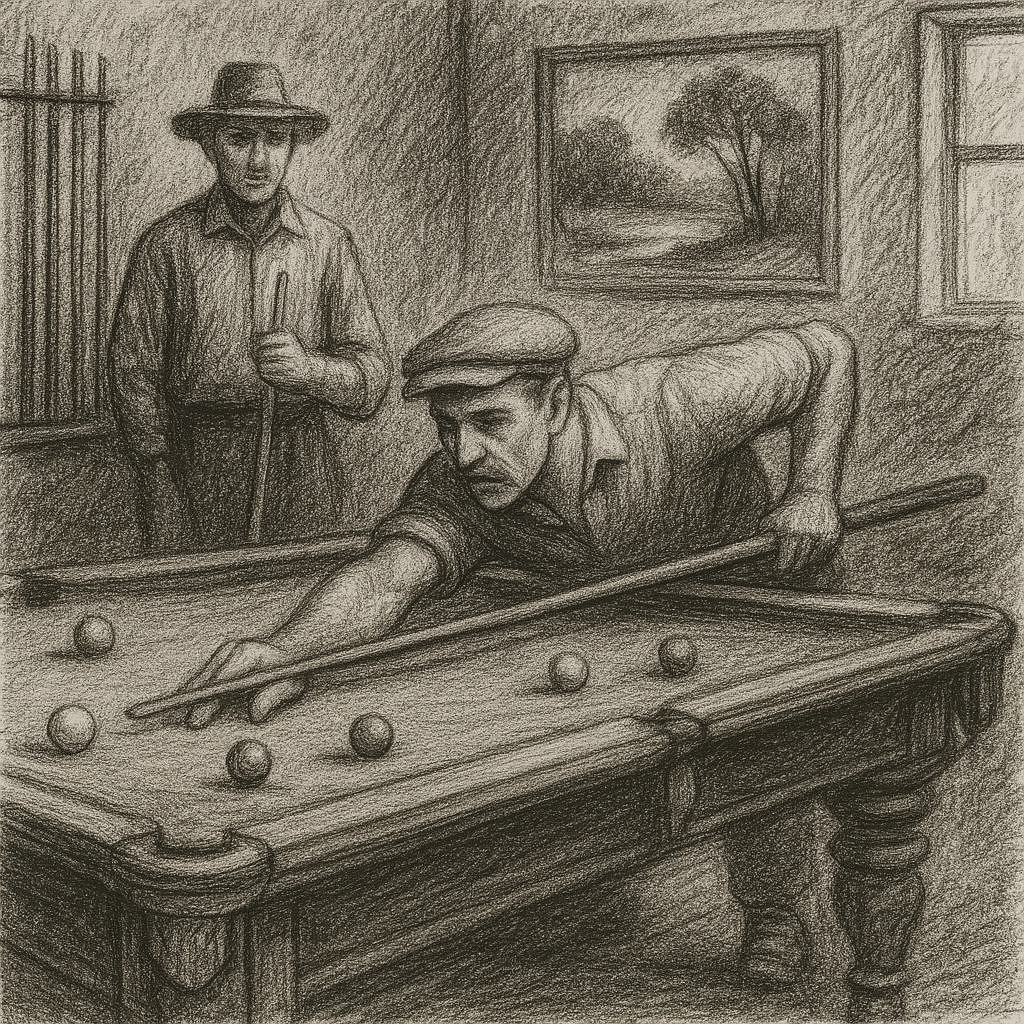
Occasionally, the evening at De Baum’s would be enlivened by the music of a harp and violin played by an Italian father and son. One night, the clinking of billiard balls and the hum of conversation and merriment suddenly ceased. An order had been called for a song. A well-known and prominent legislator stepped forth and, to the accompaniment of the harp and violin, sang the delightful solo ‘The Bohemian Girl’ with fine expression, causing, I’m sure, a tear in many an eye.
In Coolgardie at this time, in early June 1894, there were five public houses licensed to sell liquors more or less intoxicating. In addition, there were a few eating houses where a dish of ham and eggs could be obtained for two shillings and sixpence, a welcome change from the monotony of the weekday fair of the average dry blower of tinned dog and damper. Preserved potatoes and tomatoes were also available to those who could afford such a luxury. With the scarcity of water, we’d never paid less than a shilling a gallon for water, and in some cases, the cost of this necessity reached 2 shillings and sixpence a gallon. Accordingly, ablutions were seldom indulged in except by the man who happened to be the cook. He experienced the delight of half a pint of the precious fluid for washing his hands and face. This was accomplished by another member of the party who poured the precious fluid off the back of the Cook’s head, and as these trickled over his face, the latter’s hands were spread out and he held it to catch the precious drops that would otherwise be lost, and which were quickly swelled over the face and the wash was accomplished.
Famous Finds
Our stay in Coolgardie was short, but during that time, the famous and immensely rich Londonderry Mine was discovered and opened up. The specimens displayed in the windows of one of the banks gave promise of riches beyond the most hopeful imagining. The discoverers were a party of four or five mates ranging in years from youth to mature age. The oldest member of the party, named Perry, seemed to be afflicted with a form of palsy, and the discovery of such riches must have dispelled all further care and worry regarding his monetary future.
As they were all working miners, the find was to them of more material importance than the discovery of America to Columbus.
One of the notable events of the week in Coolgardie was the arrival of the mail by a coach from Southern Cross. Bailey Street, where the post office stood, was densely crowded. On the completion of sorting the letters, the newspapers were divided at Tobias’s store, also in Bailey Street, and piled up on the floor where applicants, without any fine feeling for the other fellows, help themselves indiscriminately. But back to the letters, Bailey Street in front of the Post Office would be packed with a dense crowd extending right across the street. Various windows were allotted to letters of the alphabet, such as one window for surnames commencing with the letter A to F, then G to P and so on. The official at each window would call a name with the initial letter, and if no response came from one of the crowd, the letter would be laid aside to be called later after all the letters had been dealt with.

By this time, the disappointed applicants would have left the crowd, rendering the actual delivery on the second call an easier matter, although even then, most letters were passed from hand to hand over the crowd to the addressee. All those, however, unfortunate enough to bear the name of ‘Smith’ had to wait until the following day, as that name was apparently too extensive. In the circumstances, much credit was due to the post officials of Coolgardie for the tact and patience exhibited by them in getting the letters delivered to the right person.
To go back for a moment to Bonnie Vale, a young fellow who wore spectacles, rather unusual among prospectors, and of an agreeable and fraternising disposition, as he had no mate, joined us on our way to the rush. I had been there earlier in the day and had pegged out a claim. I guided the party to the field where we arrived late, and as the night was bitterly cold, our newly acquired friend and I, for warmth, slept together under our double supply of blankets, and although on the ground, had the most comfortable night’s rest. The curious fact remains that I have never seen my friend since. By daylight, he started out in quest of the unattainable, like us all. This is an experience that came to many men in those days – the easy fraternising with strangers whose footsteps were bent in the same direction, and just as easy parting of the ways.
After two or three months of prospecting, we, like many others, had not struck anything payable, and as money had run shor,t I repaired to Coolgardie to replenish supplies at my bank. and on returning, I intended to explore the country up to the ‘White Feather’, but in Coolgardie I found a wire awaiting me from Mr C.Y. O’Connor, the ‘Engineer in Chief’, offering me an appointment for the location of the railway from Yalgoo to Cue. The substance of this offer was more alluring than the shadow of searching for the all-too-elusive gold, so I accepted and returned to Perth. My mates stayed on, but the gold still remained unattainable; they returned to their respective homes in the Eastern States, much improved in experience but much depleted in pocket.
By James Stoddart:
James Stoddart was born at Smythes Creek, Victoria, on July 27, 1858. He was the eldest child of publican George Stoddart and his wife Sarah Ann, nee Simpson. His father was the landlord of the Nugget Hotel.
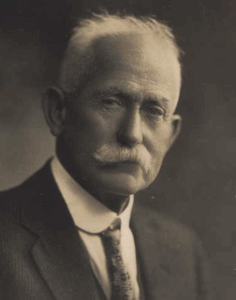
James Stoddart – Image Ancestry.com
In 1894, James was part of a group of Victorian engineers and surveyors recruited to support the expansion of infrastructure in Western Australia, led by Charles Yelverton O’Connor. James joined the WA Public Works Department (PWD) in September 1894. An early task was to survey the rail alignment from Southern Cross to Coolgardie.
James married Ellen Ann (Nelly) Hooper at Porepunkah, Victoria, on March 3, 1888. They had two sons, Eric William Hooper and Ralph James Hooper, as well as two daughters, Eileen Beatrice Hooper and Lily Marjorie Hooper. James died on April 18, 1944, aged 86 years. He was survived by his four children. His wife, Nelly, predeceased him in 1927 – Engineering Heritage Australia
Ref: Extract from the Journal of the Western Australian Historical Society, July 1930.


Moya Sharp
Latest posts by Moya Sharp (see all)
- Dear Reader - 10/10/2026
- Doyle’s Well: Coaches, Cold Beer and Frog Cocktails - 10/10/2026
- A Fate Worse than Death – Lost in the Bush - 10/10/2026
Dear Moya,
I’ve been receiving your blogs for some years and occasionally send you a comment and some dollars. Thank you for the “Gold Fever Dreams..” article, such good details of how they got to the goldfields then, and the characters there.
Kind regards from Rose.
[I’ve put in a donation.]
Many thanks Rose and I’m so glad you enjoy the stories.
Hi Moya. Absolutely love Gold Fever Dreams. What a gripping story. Thank you. Warm Regards. Diane Anderson. 💖